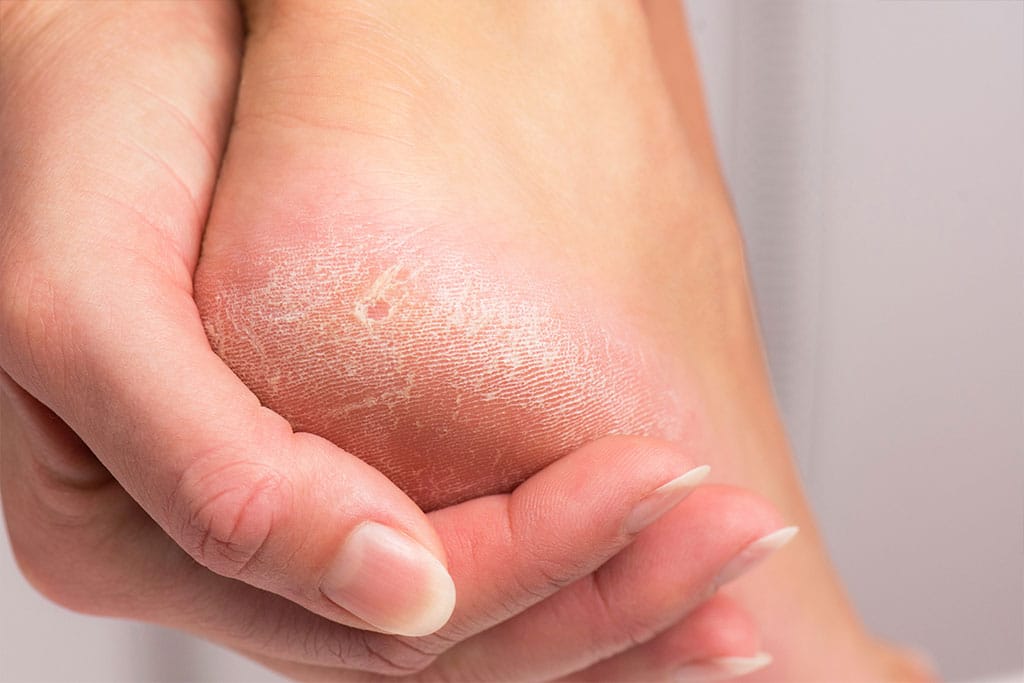
Cracked heel skin develops when dry, thickened skin around the heel loses flexibility and begins to split under pressure. Small surface cracks may mainly feel rough, while deeper fissures can become painful and sometimes bleed.
Restoring moisture matters, but footwear, standing pressure, and repeated friction also influence whether the cracks keep reopening.
Why Heel Skin Starts to Split
The heel carries considerable pressure during standing and walking. When the surrounding skin becomes dry and thick, it may not stretch comfortably as the heel expands against the ground.
Open-backed footwear and walking barefoot can add mechanical stress. Broader wellness reference pages may discuss many skin concerns, but the combination of dryness and repeated pressure is particularly relevant to heel fissures.
Use a Thick Moisturizer Consistently
Moisturizing is most useful when it becomes part of the daily routine rather than something used only after a crack becomes painful. Applying a heel cream after washing and again before bed can help reduce dryness.
The American Academy of Dermatology advises moisturizing cracked heels shortly after bathing and describes creams containing ingredients such as urea, alpha hydroxy acid, or salicylic acid as options for thick heel skin. It also suggests plain petroleum jelly at bedtime.
Protect Moisture Overnight
After applying petroleum jelly or another thick moisturizer, socks can help keep the product against the skin and reduce transfer to bedding.
Products containing exfoliating acids or urea can sting on open fissures, so painful or bleeding cracks may need a gentler approach and professional advice.
Footwear Can Affect Whether Cracks Return
Shoes that hold the heel securely may reduce the sideways expansion and rubbing that occur with loose or open-backed footwear. A worn-out heel cup can provide less support.
People comparing consumer safety reading should remember that footwear changes cannot correct every heel problem, especially when an underlying skin or medical condition is contributing.
| Heel Issue | What You May Notice | Useful Response |
|---|---|---|
| Mild dryness | Rough, flaky heel | Moisturize daily |
| Thick callus | Hard outer rim | Gentle softening care |
| Surface fissure | Fine visible split | Reduce pressure and dryness |
| Deep crack | Pain or bleeding | Seek appropriate evaluation |
Be Careful With Callus Removal
Thick heel skin may encourage aggressive filing or cutting. Removing too much skin can cause tenderness, bleeding, or additional irritation.
Gentle care is safer than trying to remove a callus in one session. General self-care reading can help reinforce routine habits, but blades and other sharp tools should not be used to cut heel skin at home.
Where Home Care Can Fall Short
Not every cracked heel is purely cosmetic. Eczema, psoriasis, fungal problems, and other conditions can affect the feet, while certain health problems may also change skin integrity or wound healing.
Someone with diabetes, poor circulation, reduced sensation in the feet, or a history of slow-healing wounds should be especially cautious about treating significant cracks without medical guidance. Small injuries may require more attention in these situations.
When Does a Cracked Heel Need Medical Care?
Arrange medical evaluation for deep or repeatedly bleeding fissures, significant pain, increasing redness, warmth, swelling, drainage, or other signs of infection. Cracks that remain severe despite consistent moisturizing should also be checked.
The AAD advises consulting a dermatologist when dry, cracked heels are severe or fail to improve with appropriate home care.
Frequently Asked Questions
Can cracked heels heal with moisturizer alone?
Mild cracking related mainly to dryness may improve with regular moisturizing and better heel protection. Deep fissures, persistent calluses, infection, or an underlying skin condition may require additional treatment.
Is petroleum jelly useful for cracked heels?
Yes. Petroleum jelly forms an occlusive layer that reduces moisture loss. It is commonly used at bedtime, often with socks, as part of a routine for dry heel skin.
Why do my heel cracks keep coming back?
Recurring cracks can reflect ongoing dryness, thick callus, pressure, footwear, climate, or an underlying condition. Addressing moisture without changing the mechanical stress on the heel may produce only temporary improvement.
Give the Heel Time to Recover
Cracked heels respond best when moisture restoration and pressure control happen together. Use gentle cleansing, moisturize consistently, and choose footwear that does not repeatedly stress the heel edge.
Do not ignore a fissure simply because it began as dry skin. If it becomes deep, painful, infected-looking, or stubborn, professional assessment is the safer next step.
This article is for general informational purposes and is not a substitute for professional medical advice, diagnosis, or treatment.