
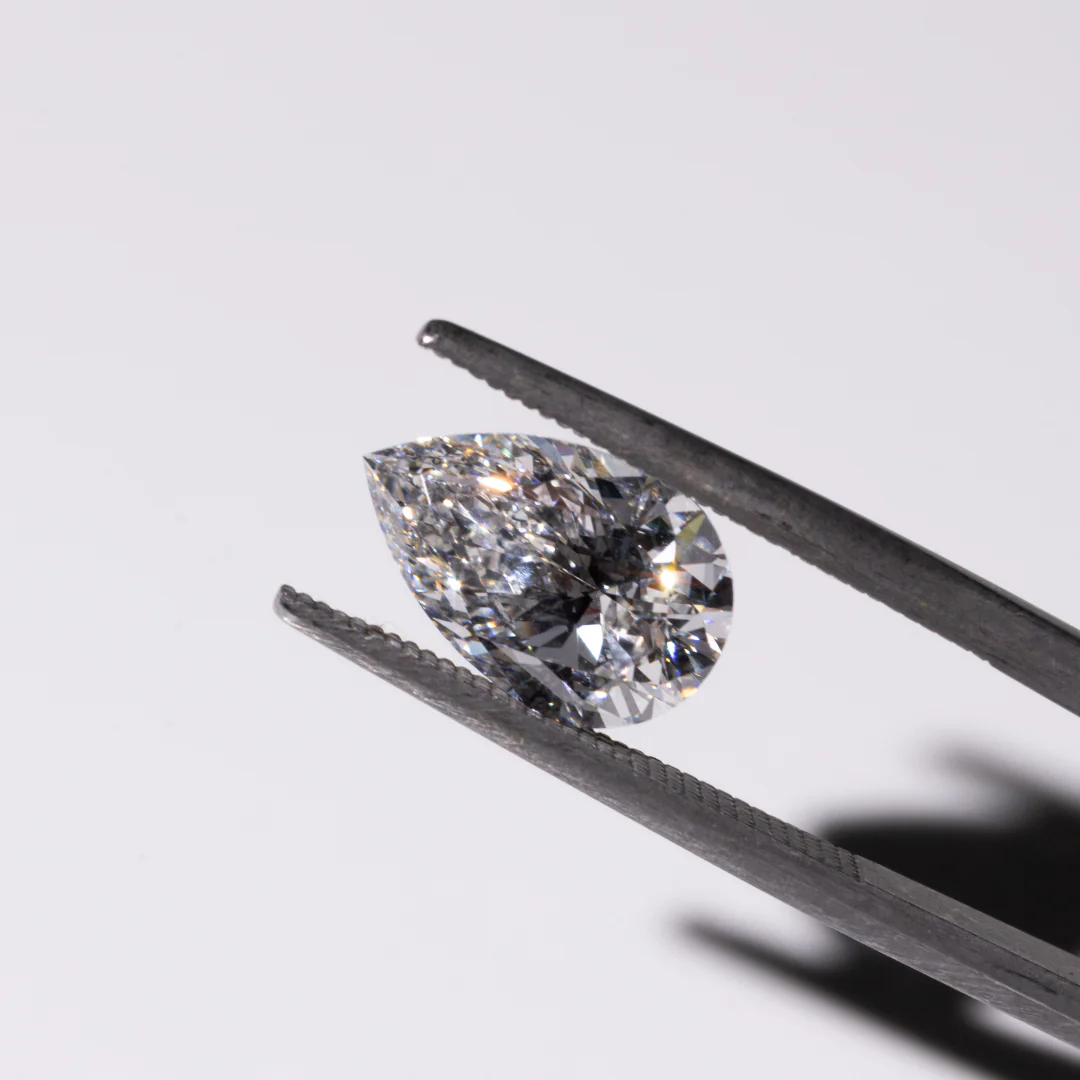
The emerald cut has a presence that feels quietly assured. Rather than relying on intense sparkle, its elongated shape and broad, stepped facets create crisp flashes of light and a distinctive hall-of-mirrors effect. This architectural character makes it particularly well suited to jewellery that values proportion, precision, and understated elegance.
Exploring emerald cut diamonds by Lily Arkwright reveals how versatile the shape can be across both traditional and contemporary designs. Lab-grown diamonds share the same chemical, physical, and optical properties as mined diamonds, allowing the emerald cut’s clarity and symmetry to remain the focus while offering a modern approach to fine jewellery.
The Emerald-Cut Solitaire
A solitaire is perhaps the purest expression of an emerald-cut lab diamond. With no surrounding stones competing for attention, the eye is drawn immediately to the diamond’s clean outline and geometric facets.
Four-claw settings expose more of the stone and can create a light, refined appearance. Bezel settings offer a smoother, more contemporary profile while providing additional protection around the edges. The choice often depends on lifestyle as much as taste. Someone who works frequently with their hands may appreciate the security and streamlined feel of a bezel, while another wearer may favour the openness of a claw setting.
Proportion also matters. A one-carat emerald-cut diamond can look elegant and delicate, particularly on a slender band. A two-carat stone offers more than increased visual impact: its larger table makes the stepped facet pattern easier to appreciate, producing a stronger sense of depth and structure.
Halo and Three-Stone Designs
Although emerald cuts are naturally restrained, they work beautifully in more detailed settings. A halo of smaller diamonds can soften the strong rectangular outline while increasing the overall spread of the piece. This makes halo designs appealing to those who enjoy a more luminous look without losing the emerald cut’s distinctive geometry.
Three-stone arrangements create a different effect. Tapered baguettes placed beside the centre diamond continue its clean, linear character, resulting in a cohesive Art Deco-inspired composition. Pear-shaped or round side stones introduce contrast, balancing the centre stone’s precision with softer curves.
These settings can also carry personal meaning. Three stones are often chosen to represent the past, present, and future, making the design especially appropriate for engagement rings or milestone anniversary jewellery.
Emerald Cuts in Earrings and Pendants
Emerald-cut lab diamonds are not limited to rings. Their elongated silhouette translates naturally into earrings, where it can create a flattering vertical line. Simple emerald-cut studs feel polished and modern, while drop earrings allow the stones to move and catch light from different angles.
In pendants, the cut has an almost gallery-like quality. A single stone set vertically creates a refined focal point that works equally well with an open neckline or layered chains. An east-west setting, where the diamond is positioned horizontally, gives the same stone a more contemporary and unexpected character.
For everyday wear, a modestly sized emerald-cut pendant can offer definition without appearing overly formal. Larger stones or diamond-accented settings are better suited to evening jewellery and significant occasions.
Choosing Metals and Supporting Details
The metal surrounding an emerald-cut lab diamond can subtly change its personality. Platinum and white gold reinforce the stone’s cool, precise appearance, producing a seamless and sophisticated finish. Yellow gold creates a warmer contrast that can make the diamond’s shape appear even more pronounced. Rose gold introduces softness and is particularly effective in designs that combine geometric stones with delicate bands.
Band width should also be considered. A narrow band can make the centre diamond appear larger and more prominent, while a wider band creates a stronger, more balanced silhouette. Fine pavé detailing adds brilliance without overwhelming the central stone, whereas a plain polished band keeps the design disciplined and minimal.
Final Thought
The appeal of an emerald-cut lab diamond lies in its ability to adapt without losing its identity. It can appear timeless in a solitaire, glamorous within a halo, symbolic in a three-stone setting, or distinctly modern when placed east-west in a pendant or ring. Its beauty is not defined by constant sparkle, but by clarity, proportion, and deliberate design—qualities that allow it to feel personal across an unusually broad range of jewellery styles.