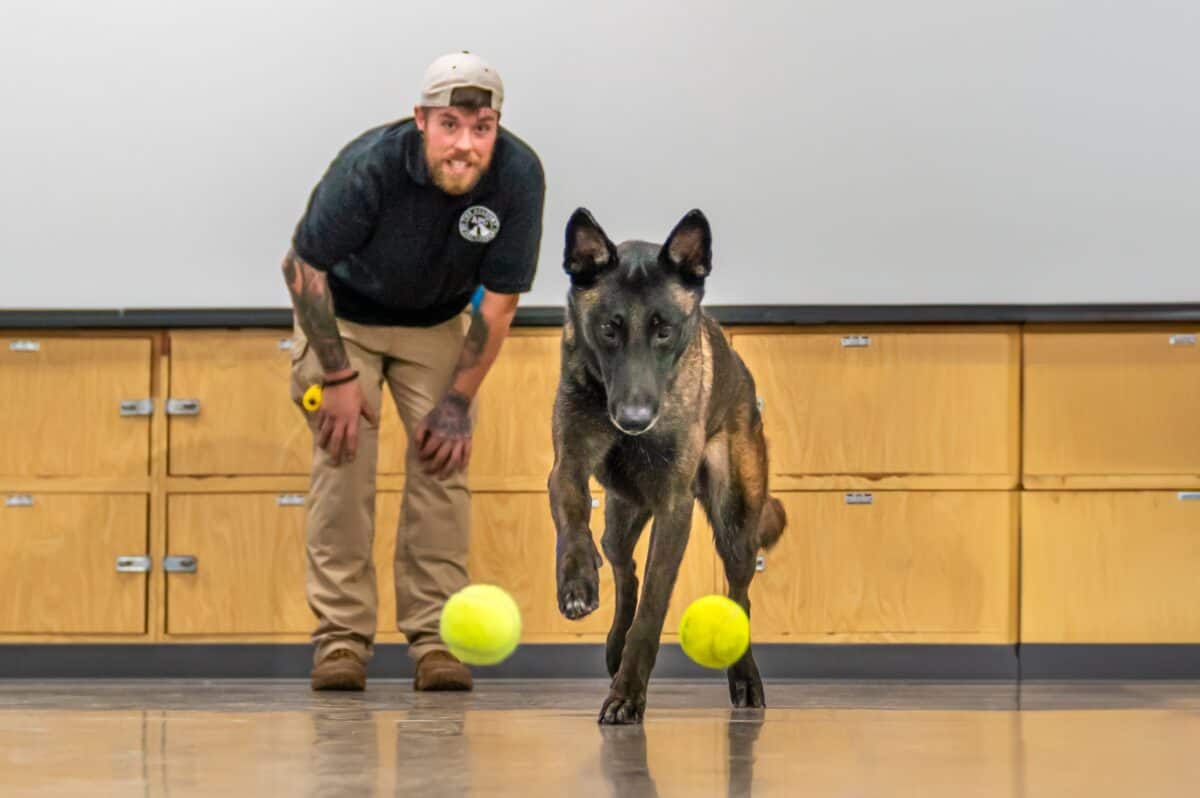

Bored indoor dogs often need more than another nap spot or a longer stretch of free time inside the house. Dogs benefit from opportunities to sniff, search, solve simple problems, interact with people, and move their bodies in ways suited to their age and physical condition.
The useful question isn’t how to keep a dog busy every minute. It’s how to make ordinary parts of the day more engaging.
Turn Meals Into Something the Dog Can Do
A food bowl finishes the job in minutes. Using part of a dog’s normal meal for simple searching activities can turn feeding into mental work without automatically adding extra calories.
Owners collecting ideas from broad web references may find countless complicated activities, but enrichment doesn’t need expensive equipment. Scatter suitable kibble across a safe room, hide portions in easy locations, or place food in a puzzle feeder the dog already understands.
Begin with easy challenges. A game that is too difficult may create frustration rather than useful stimulation.
Use Short Training Sessions Throughout the Day
Training is mental exercise. Practicing sit, stay, touch, place, recall, or simple tricks asks a dog to pay attention, make choices, and respond to cues.
You might encounter broader digital reading while looking for activity inspiration, yet the most useful sessions are usually based on your own dog’s attention span. A few focused minutes can work better than one long session where interest disappears.
| Activity | What It Adds | Easy Starting Point |
|---|---|---|
| Food search | Scent work | Visible treats |
| Basic training | Focus | Familiar cues |
| Tug or fetch | Movement | Short rounds |
| Toy rotation | Novelty | Swap a few toys |
End while the dog is still interested. That keeps training from becoming a chore.
Rotate Toys Instead of Leaving Everything Out
A floor covered with toys doesn’t guarantee engagement. Familiar objects can become background scenery when they are available all day.
Try putting some toys away and changing the selection every few days. A forgotten toy can feel interesting again when it reappears. A general resource page can be part of broader online browsing, but watch your dog’s actual responses instead of assuming every enrichment idea will suit every pet.
Different dogs prefer different activities. One may enjoy tugging, while another is more interested in scent games.
Add Movement With a Purpose
Indoor exercise can include hallway fetch, gentle tug, controlled stair use where appropriate, or moving between training stations. Outdoor walks become more enriching when dogs sometimes get time to sniff instead of being hurried continuously forward.
Intensity should match the individual dog. Puppies, older dogs, and dogs with physical limitations may need different activities from healthy adult dogs.
Mental work and physical exercise also complement each other. A dog that has spent time sniffing and solving problems may settle more easily than one receiving only repetitive high-energy play.
Where Indoor Enrichment Goes Wrong
More activity isn’t always better. Constant stimulation can make it harder for some dogs to switch off and rest, while overly difficult puzzles may lead to barking, chewing, or simply walking away.
Another common mistake is introducing several new activities at once and never noticing which ones the dog actually enjoys. Change one thing at a time. Watch body language, willingness to participate, and how easily the dog settles afterward.
Frequently Asked Questions
How can I entertain my dog indoors without buying toys?
Use normal household routines creatively. Hide part of a meal, practice familiar commands, create simple scent searches, play short games, or teach the dog to move between designated spots.
How often should indoor dogs get mental stimulation?
There isn’t one schedule that fits every dog. Several short opportunities spread through the day can be easier to sustain than one long session. Adjust according to age, temperament, health, and response.
Why is my dog still restless after exercise?
Physical movement may not satisfy every need. Some dogs also benefit from sniffing, training, social interaction, predictable routines, and opportunities to settle. Sudden or unusual behavioral changes may also justify veterinary advice.
Build a Better Daily Rhythm
Helping a bored dog doesn’t require filling every hour with entertainment. Mix movement, sniffing, problem-solving, training, social time, and quiet rest into a routine you can maintain.
Pay attention to which activities leave your dog calmly satisfied rather than simply exhausted. The best enrichment plan is one that remains interesting for the dog and practical for the household.