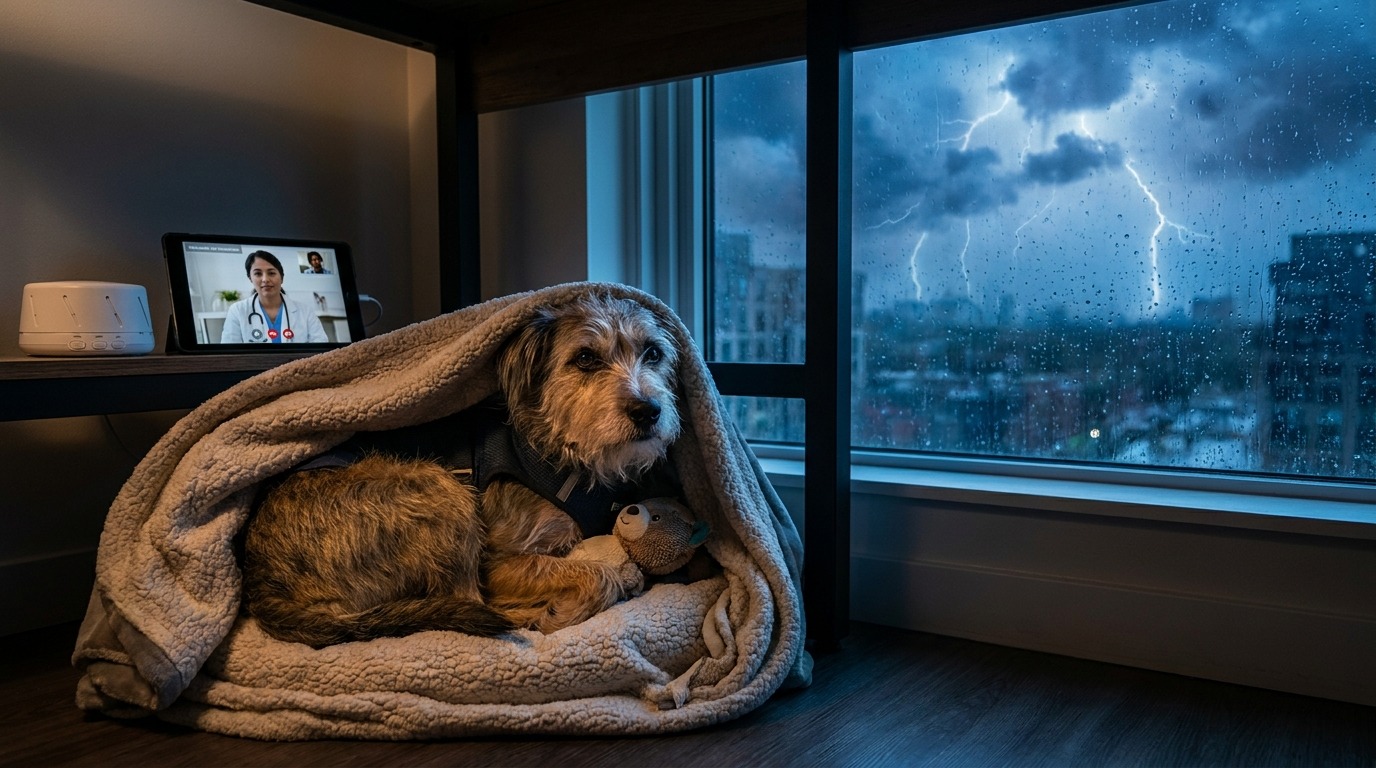
Storms can turn an otherwise relaxed pet into a shaking, pacing, hiding, or escape-seeking animal. Reducing loud pet anxiety usually works better when owners prepare before thunder starts instead of trying to improvise after the pet is already highly frightened.
The goal isn’t to force the animal to “get used to it.” It is to make storm periods safer, quieter, and more predictable.
Recognize the Pet’s Early Fear Pattern
Storm anxiety doesn’t look identical in every animal. Some dogs become restless long before thunder becomes loud, while others hide, pant, tremble, cling to people, vocalize, or search for an exit.
ASPCA guidance notes that storm-frightened pets may shake, pace, drool, or attempt dangerous escape behaviors. Individual triggers may include thunder, lightning, or other changes associated with storms.
Noticing the first signs gives you more time to respond calmly.
Create a Safe Indoor Retreat
Choose a familiar interior area where outside noise and flashing light are reduced. A comfortable bed, crate the pet already likes, favorite blanket, and ordinary household sounds can make the environment less exposed.
People browsing everyday pet-care reading will encounter many calming ideas, but avoid suddenly locking a frightened animal somewhere unfamiliar. A safe space works best when the pet already associates it with rest.
Reduce Noise Without Creating More Stress
Close windows and curtains before the storm becomes intense. Fans, televisions, air conditioners, or steady background sound may reduce the contrast between silence and sudden thunder.
General household planning ideas can also be useful because storm preparation involves the home itself. Secure doors, gates, screens, and potential escape routes before fear peaks.
| Fear Sign | Possible Response | What to Avoid |
|---|---|---|
| Hiding | Allow access to a safe retreat | Dragging the pet out |
| Pacing | Keep surroundings calm | Repeated scolding |
| Clinging | Stay quietly nearby | Excited reactions |
| Escape attempts | Secure doors and windows | Leaving exits accessible |
Keep Your Own Response Predictable
Pets often benefit from calm, ordinary interaction. You don’t need to act frightened about the storm, nor should you punish fear-related behavior.
Some calm-home resources emphasize creating relaxing surroundings, and that idea applies here in a practical way. Keep voices normal, avoid chaotic activity, and offer a familiar activity if the pet remains interested in food or play.
Think Ahead Before Leaving Home
Check the weather when storms are expected. If possible, arrange for the pet to remain indoors rather than outside or alone in an unsecured area.
Identification tags and microchip information should also remain current because frightened animals can behave unpredictably if they escape.
What Owners Commonly Get Wrong
Punishing a frightened pet rarely addresses the fear that produced the behavior. Another mistake is exposing an animal to extremely loud storm recordings at full intensity in an attempt to make the fear disappear quickly.
Constantly changing strategies can also create confusion. Start with environmental management and routine. If anxiety remains severe, professional guidance is more sensible than experimenting endlessly with unverified calming products.
When a Veterinarian Should Be Involved
Veterinary help is appropriate when storm fear becomes intense, repeatedly causes injury, leads to destructive escape attempts, or significantly affects the pet’s welfare.
A veterinarian can also check whether another medical or behavioral issue is contributing to unusual reactions. Don’t give pets human sedatives, supplements, or medications without veterinary guidance.
Frequently Asked Questions
Should I comfort my dog during thunderstorms?
Calm companionship is generally different from creating frantic attention around the fear. Let the dog stay near you if desired, speak normally, and provide access to a familiar safe area without forcing interaction.
Can a pet suddenly develop storm anxiety?
Yes. Fear patterns can change over time, and some animals become more sensitive after frightening experiences or as they age. A sudden major behavioral change is worth discussing with a veterinarian.
Should pets stay in crates during storms?
Only when the crate is already a comfortable, familiar retreat and the pet willingly settles there. A panicked animal trying to escape confinement may injure itself, so observe the individual response carefully.
Prepare Before the Thunder Starts
Storm anxiety is easier to manage when the house, safe space, and routine are ready beforehand. Watch for early fear signals, reduce outside stimulation, secure escape routes, and keep your response calm. If the pet remains severely distressed despite those changes, involve a veterinarian rather than allowing every storm to become another crisis.